Basecamp → The Principles → HEARTBEAT (INTRO) → Part 1.2
The first thing to recognize is that a site’s “Heartbeat” and ethos emerge at some unidentifiable point.
Whether you’ve read my essay Cities and Ambition (6 min read), please read it now to get the best from this lesson.
Many cities give off a subtle “message.” In the essay, I cite another essay with the same name from Paul Graham (2008), in which he reduced the message to a sense of ambition.
“Great cities attract ambitious people. You can sense it when you walk around one. In a hundred subtle ways, the city sends you a message: you could do more; you should try harder.”
The framing I prefer for digital world-building is reducing the “message” to a sense of either resonance or dissonance. This feeling is consistent whether I’m walking through the streets of a city or browsing a digital website.
For me, ambition is downstream of resonance — the positive feeling that causes me to lean in, to linger, to slow down, and orient to the nature of this feeling I want more of.
The opposite is almost always true, too. If I’m not feeling resonance, it’s likely dissonance, like stumbling into a bad neighborhood.
I was in San Francisco for the first time in October 2022. Three of us rented electric scooters and explored the streets with no destination in mind.
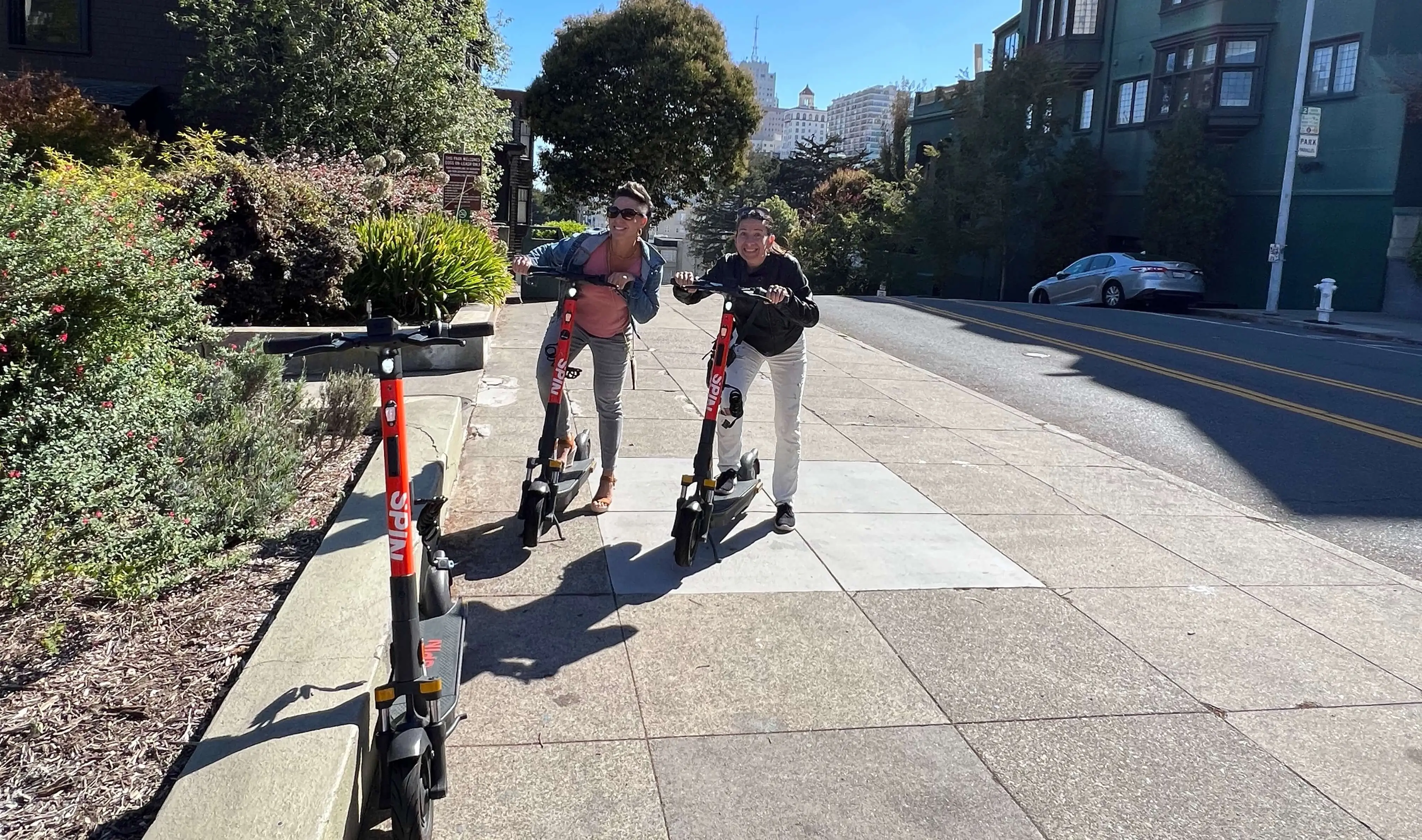
We passed Twitter HQ before it became X. We barreled past the iconic Apple Store (where I returned to purchase an Apple Watch Ultra before it hit the UK)…
Then we made a “wrong turn in Albuquerque” — the Tenderloin neighborhood. If you know San Fran, you’ll know what I’m about to describe. It was like we had passed through a portal into a dystopian hellscape. There were homeless people scattered across the sidewalks, the ravages of heavy drug use etched into every face, vacant eyes staring into the void as we silently whizzed past.
One guy was shouting at cars, another spitting at them as they passed. It was jarring. I’ve visited many cities around the globe — wealthy, poor, and everything in between, but this was new to me. We couldn’t hightail it out of the neighborhood fast enough.
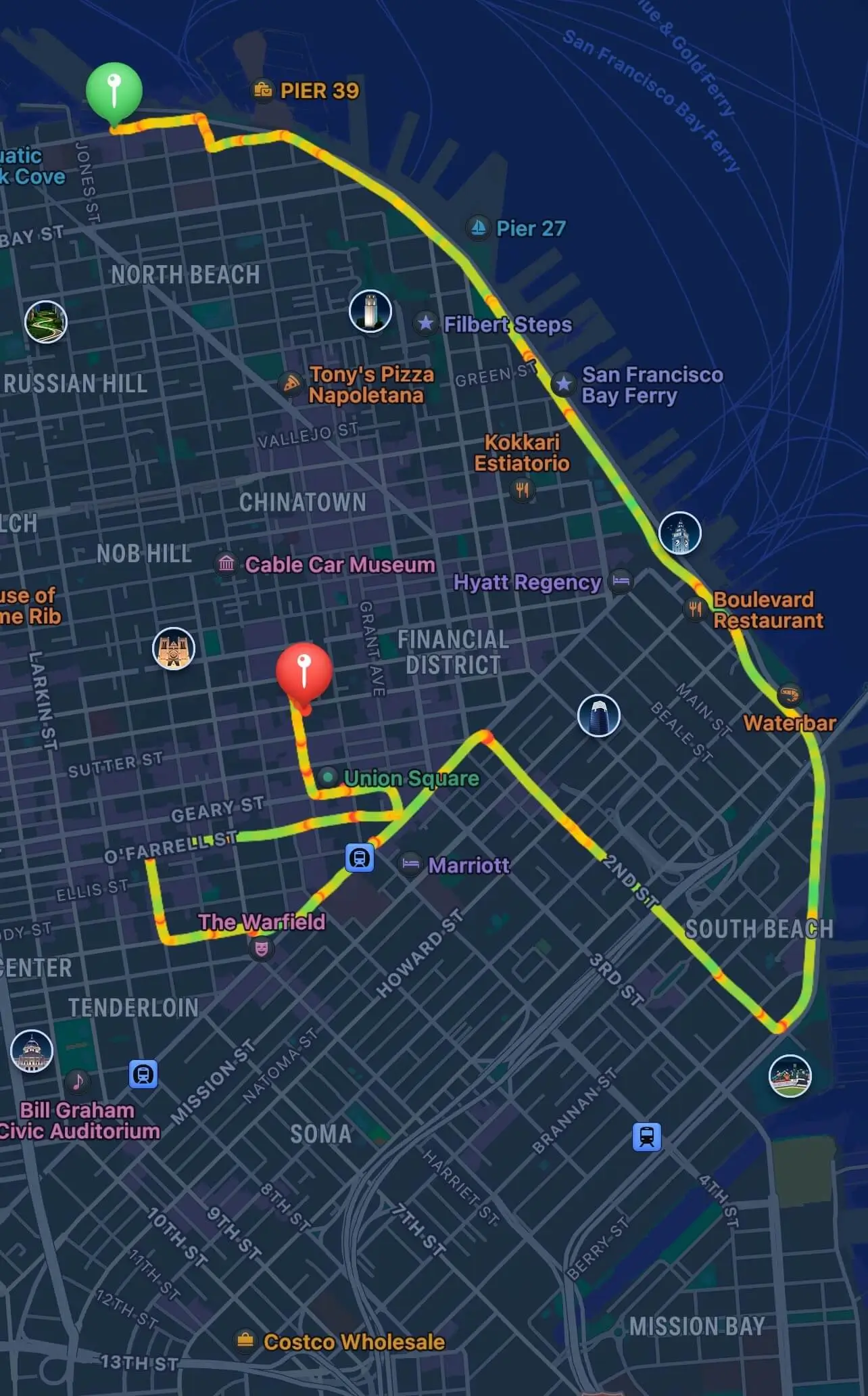
I (mostly) loved San Francisco’s vibe, but I can’t get the memory of the Tenderloin neighborhood out of my mind. It tainted the experience. Mostly, it was incredibly sad seeing fellow humans living in such desperate conditions, struggling to survive on the streets just a few miles from the unlimited wealth of Silicon Valley.
Big cities may seem different from digital websites in this respect, but I don’t think they are. The metaphor, to me, is clear. I’ve lost count of how a positive “message” can turn on a dime when the user experience suddenly changes.
Perhaps it’s the decision to present a five-minute countdown timer on the checkout page (only for me to refresh or open a new browser session and for the timer to reset back to five minutes). Or I’m enjoying a half-decent email series only for the tone and language to suddenly shift, needlessly applying scarcity and sales pressure incongruently, causing my internal alarm bells to ring and for me to abandon the process on principle.
Delete. Unsubscribe. Done.
If a city (or website) fails to elicit a memorable impression on me — neither drawing me in nor pushing me away — it becomes forgettable, and the chances of me revisiting are slim to nonexistent.
I ended my essay with this, but it is worth reemphasizing:
Because make no mistake, like it or not, your website, your place of business — it’s putting out a message. Subtly, implicitly, or “by accident,” it’s there, talking to your people.
The message is an emergent property — a felt voice — from all the “parts” of your business interacting in ways that are not always obvious or predictable.
But it’s there. Talking. Attracting.
(And repelling.)
Because we’re in the resonance business, we must be intentional about the message our digital world subtly projects.
Let’s explore the dynamic of Heartbeat and ethos more.