The (beautiful) internet I grew up with no longer exists.
I was born in the 70s.
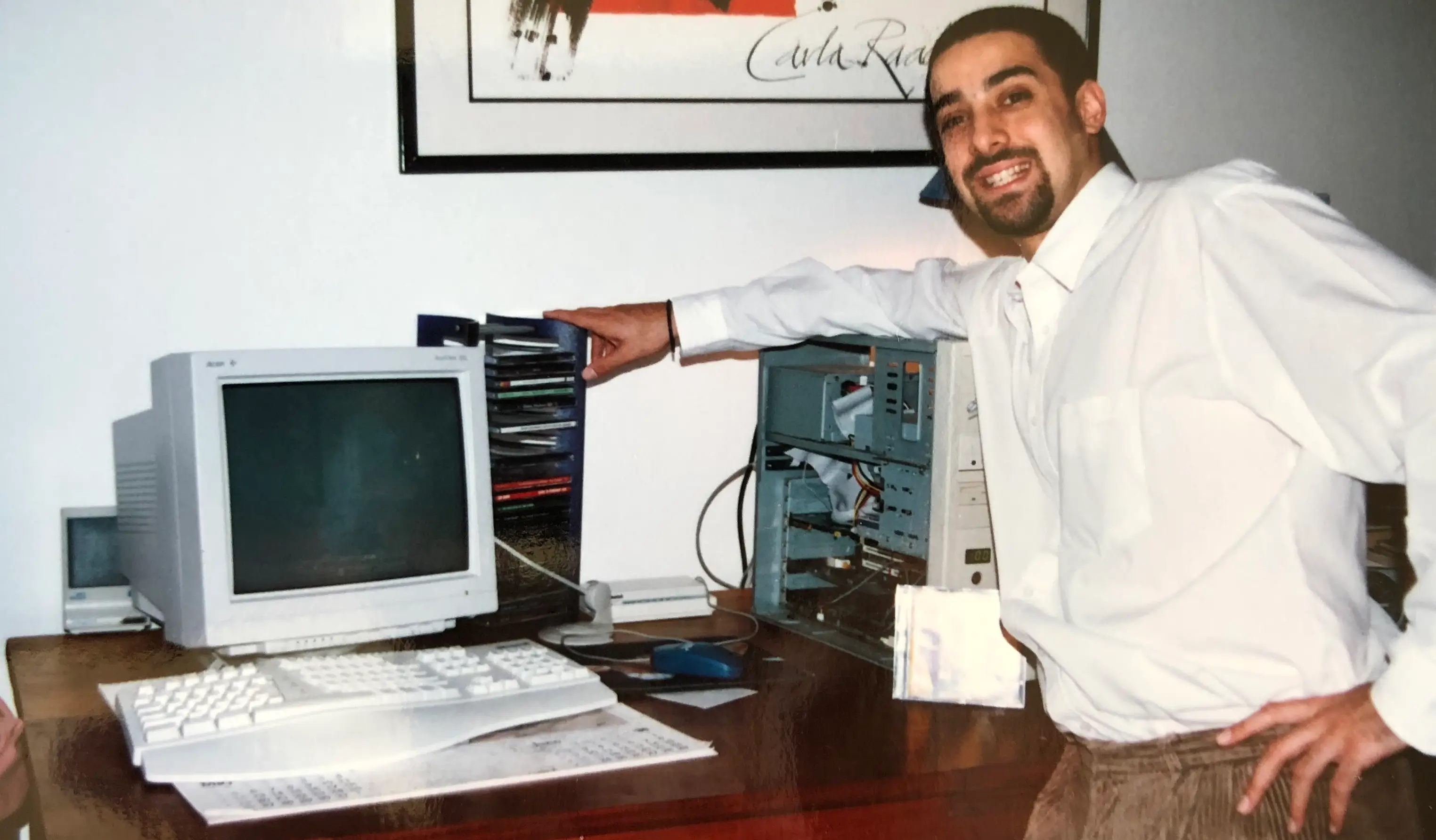
I left high school in 1991 — the era of dial-up modems and Bulletin Board Systems. Small, strange, deeply specific corners of the internet where enthusiasts gathered around shared interests.
You didn’t “build an audience” back then.
You found your people. Or, more accurately — they found you. Like gravity — people coalescing around the shit that mattered, around the center of a subculture.
At that point, the web felt … human. Sparse. Slow. Intentional.
There was space. And because there was space, there was signal. You could feel it when you stumbled across something that mattered — even if you couldn’t yet explain why. Rough edges. Personality. Taste. Weirdness.
It felt like something someone had made in a shed with the garage door open, not something optimized into existence.
There was a moment — early on — where a small team of misfits (John Carmack and John Romero) at id Software did something unusual.
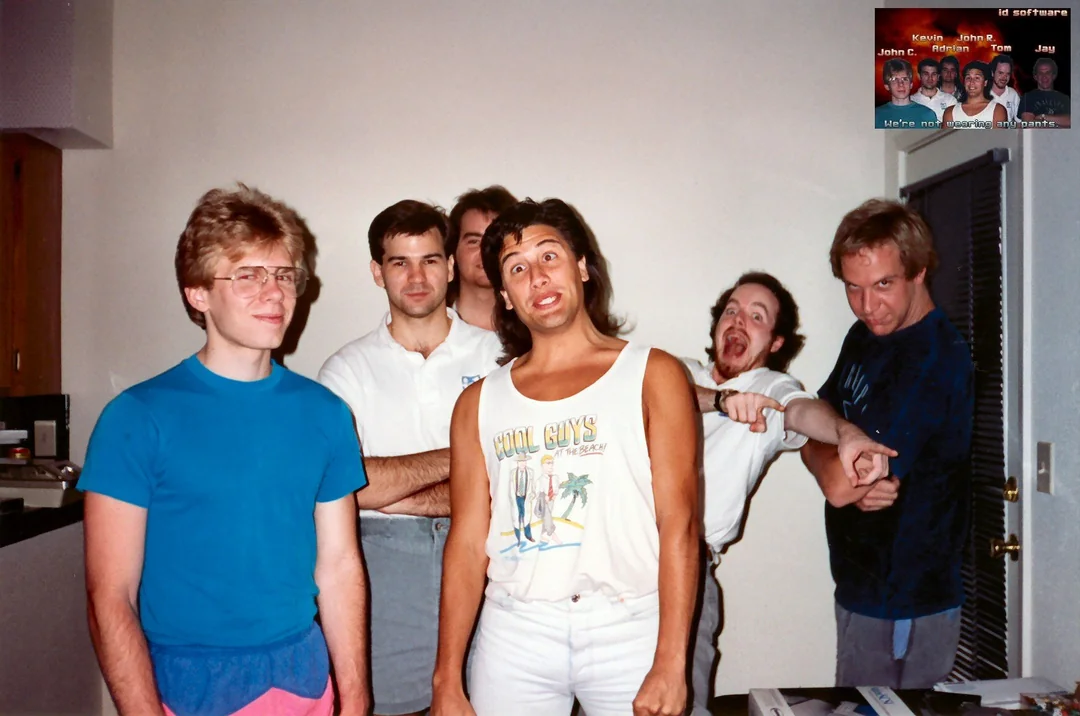
They built a game … and gave part of it away — the old “try before you buy” shareware model.
It spread quietly. Copied. Passed around. Shared between people who recognized something in it. Enthusiasts born.
And if you were one of them, like I was — you didn’t hesitate. You called in … or mailed an order … and bought the rest directly from them (I did).
No publisher. No retail shelf. No middle layer taking most of the upside. Just a tiny team of weirdos and the people who got it. People like us.
Romero’s stepfather didn’t believe game development was a real vocation. “You’ll never make any money making games,” he’d say. “You need to build something people actually need.”
And yet … at its peak, Wolfenstein 3D was pulling in around $200,000 a month. Then DOOM arrived — the real “holy shit” moment, and within a year, they were doing millions a month. They’d accidentally built a money-printing machine. The thing of dreams. A unicorn, of sorts, before the term even existed.
Not because they “marketed” better. But because they controlled the relationship. “Have this thing for free — if you dig levels 1 and 2, you can buy the rest.” No pressure. No funnel. The money came as a byproduct.
They built for the people who felt it — people who cared.
Continue (Page 2 of 11) →~ André

P.S.
I’ve received a few emails asking — wondering — why the yellow gradient, only only on this page?
While I prefer not breaking the ambiguous spell of the implicit — and this letter has many — I’ll make an exception this time.
Two reasons.
First — yellow is my favorite color. :)
Second (and more to the point), I borrowed the gradient from the home page — it’s the only other place on the site where it appears.
It’s meant to signal a transition. Something new. Potential. A kind of “sunrise.” The beginning of something.
On the home page, that marks entry into the World.
On this Invitation page, it’s a similar threshold — this time, moving from the outer world to the inner.
That’s it. No more spoilers.
