Basecamp → The Principles → Orientation & Wayfinding → The Map
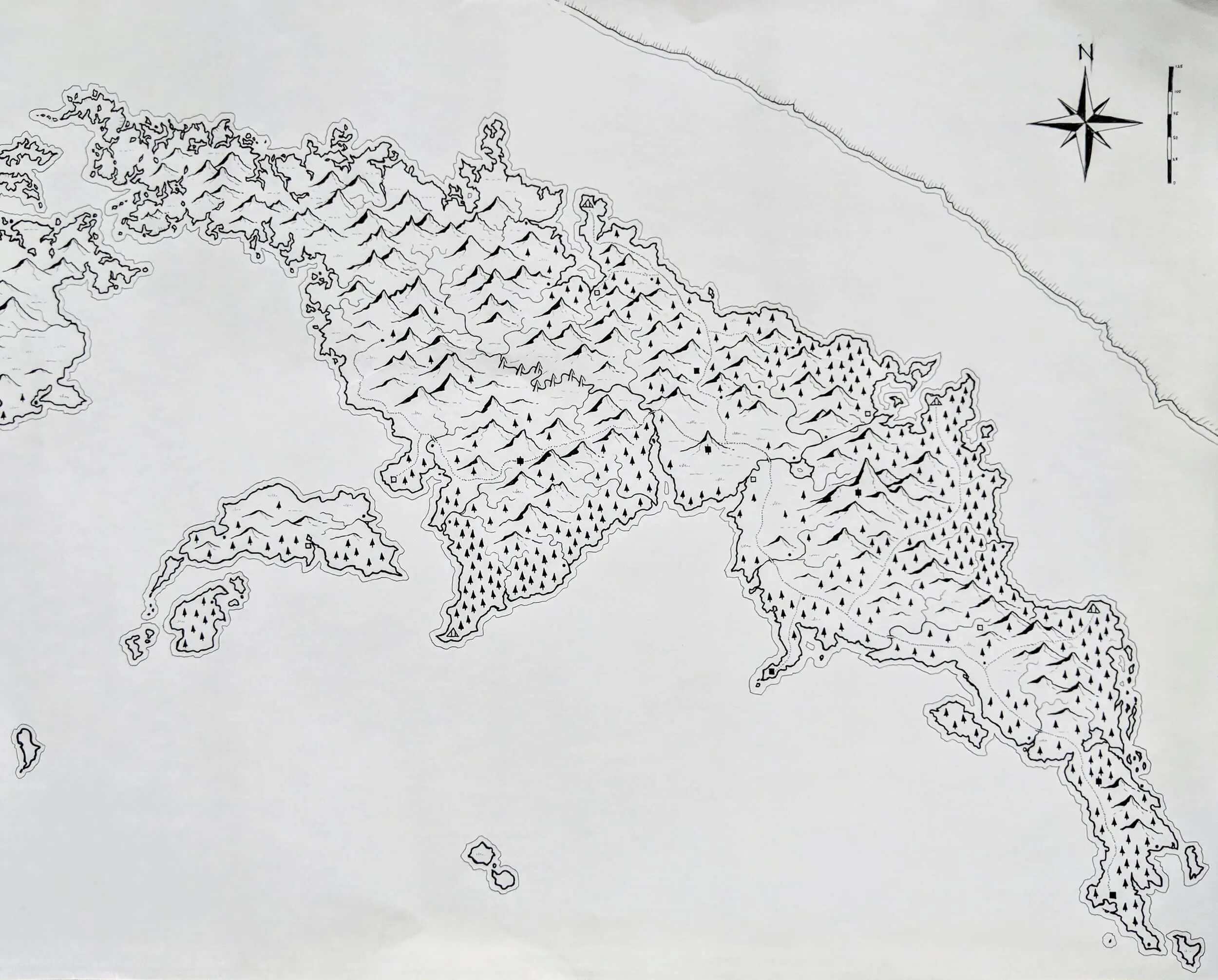
In contrast, a “map” empowers Harper with agency, demanding engagement with the environment, attention to digital landmarks, and an active role in navigating toward a destination.
This is the essence of building a digital world for sovereign creators like us.
The Survival Guide, GPS vs. Map
To frame this lesson, I’ll use andrechaperon.com/ from around August 2023 as our model. It was newly birthed and didn’t have many pages. However, this didn’t detract from presenting a “map” for Harper to notice (“foreground”) and use to orientate.
This helped Harper to quickly foreground the most salient elements, enhancing their experience and engagement.
In the context of digital world-building, the concepts of ‘salience landscaping’ and ‘significance landscape’ hold significant importance. They are the tools that world builders use to draw attention to specific elements within their digital environments, thereby captivating and engaging their audience.
This could involve emphasizing particular content, narratives, or interactive features that stand out amidst the sea of digital information, making these aspects more ‘salient’ or noticeable.
The home page of my site provides a contextual overview of what this project is about and why it’s important for me to pursue this next chapter of my professional life:
Upon turning fifty on March 7th this year, I became acutely aware of how short our time on earth is. I found myself coming to grips with a renewed sense of purpose, a fresh and vibrant drive to find a deeper, more profound meaning in life’s second half.
In recognizing this, I needed to honor it and embark on the next phase of my journey, free of regret.
I’m using this website as the canvas for this “next chapter,” which seems fitting because it’s where this journey began twenty years ago. I suspect this will be a decade-long project (if AI doesn’t take over first, rendering me irrelevant).
I introduce the problem I see (one of the antagonistic forces in our story):
We’re living in a sea of low-quality influencer content, which I believe offers an opportunity to create something better — something that emphasizes the signal over the noise, that’s slower, calmer, and personal.
Then, I transition to hinting at a solution for people like us who care about the work we do and the people we serve:
While influencers and faux-experts trip over themselves to broadcast and publish pithy repurposed information to “followers” content on gorging on a diet of low-nutritional content, we get to play a very different game in how we attract, build, and serve audiences that matter.
And that “different game” is what I’ll be writing about here.
There are many, many ways to build an audience.
But over my two decades of experience, I have found that slowly curating and cultivating a smaller, highly engaged audience who are invested in their journey leads to greater satisfaction (and long-term profitability).
This creates a mutually beneficial win-win outcome that endures.
There’s a superpower in focusing on tiny instead of chasing mass, on slower instead of instant gratification.
Tiny Digital Worlds is for these people.
Finally, I pointed towards a “path” leading deeper into the forest.
If this resonates with you, I’ve written a Manifesto — a call to arms for sovereign creators like us in how we seek to attract and grow audiences that matter.
CYOA (which we’ll get to shortly) embodies this dynamic of the digital world. These principles emphasize agency and personalization, enabling Harper to carve a unique path through the digital world that reflects what’s salient to them at that moment.

When we recognize that Harper is not merely an individual at a specific moment in time but also a representation of our broader audience, we can appreciate the elegant simplicity and beauty of a non-linear, open-world system like this.
Harper may click through to read the manifesto.
However, Harper may instead click the Values or About link in the navigation (or even one of the other links).
Both the Values and About links offer “branches” that lead deeper into the forest, as well as links pointing externally, offering more nuance and context painted by others.
A TDW is not a siloed echo chamber. It freely points outward to relevant external resources.
The principles of Orientation and Wayfinding form a mechanism, an engine from which a sense of ethos and alignment between values and interests interact and align, and the Heartbeat of the digital world starts to emerge and be felt.
On andrechaperon.com/, I expose Harper to parts of me through my letter on the front page, revealing the essence of what matters to me and the journey I’m on. Through this perspective, Harper can embody their own values and journey, and the alignment of the two creates a sense of resonance and kinship.
My Values page is a place for me to be more explicit about what I care about, while my About page reveals parts of my character through backstory and an incredibly personal essay.
It’s important to note that nothing magical happens just because someone reads the letter on my home page, Values page, and About page. These pages contribute to something other.
§
To build a world that reflects our core principles and values and actively signals them like a beacon, we must lay a foundation rooted in those very principles.
This act, a clarion call guided by our unique Ordinating Principles, sets the stage for Transformative Experiences. Through this deliberate construction and expression of our ethos, we invite change, not just within ourselves but also within those who resonate with our message.
This process starts with Orientation and Wayfinding. These two principles provide the necessary structure and guidance for Harper’s navigation through the digital environment.
Orientation introduces Harper to the digital world’s structure, helping them understand its possibilities.
Wayfinding, on the other hand, is the process of providing cues, signs, and systems that guide Harper — that “foreground” locations that may be relevant. It’s like an interactive map that ensures Harper can find their way through the content and choices available to them.
Salience landscaping is a practical application of the way we ‘foreground’ certain things and ‘background’ others in the digital world in an effort to get an optimal grip (orientation). It’s a strategy we use to enhance our ‘situational awareness,’ allowing us to interact with our environment more effectively.
As the architects and engineers of our digital worlds, we use these principles and concepts to provide orientation to our inhabitants and citizens.
These principles underscore agency and personalization, affording Harper a unique path through the digital world. This path, reflective of their engagement, is a testament to their individuality and distinctiveness.